Showers do heavy lifting in Colchester homes. They start early, run late, and rarely get a day off. When they work, you barely notice. When they falter, the whole household feels it. As a plumber in Colchester, I’ve seen how a well‑planned shower installation saves years of hassle, and how a thoughtful repair can stretch the life of existing fittings without spending more than needed. This guide blends practical advice with the judgement calls that come from crawling through lofts, opening tiled riser panels, and fixing the same stubborn faults that pop up again and again.
What tends to go wrong with showers
Most shower problems fall into patterns. Low pressure usually traces back to an undersized hot water cylinder outlet, limescale choking a mixer cartridge, a partially closed isolating valve, or a booster pump past its best. Temperature swings often point to a thermostatic cartridge that has drifted off calibration or debris lodged behind non‑return valves. Drips from a fixed head usually come from a worn seal or a scored valve seat inside the mixer, while a bar mixer dripping at the unions often means tired O‑rings.
Noise is another giveaway. A hammering pipe off a stud wall suggests loose pipe clips, an air pocket in the line, or a sudden closing ceramic disc valve with nowhere for momentum to go. Vibrations around the airing cupboard when a shower starts can mean a pump running dry, a stuck reed switch, or cavitation because the cold feed is restricted.
Leaks are the quiet saboteurs. The worst ones aren’t dramatic. A pinhole in a push‑fit elbow under a tray can wick into chipboard for months. You see it later as a bowed kitchen ceiling or swelling skirting boards. Around Colchester, I see this most under low‑profile trays set on timber floors without proper support and with trap access either buried behind silicone or not provided at all. Once swollen, that floor needs cutting back and bracing, which means you’ll wish someone had spent an extra hour getting the base rock solid from the start.
Choosing the right shower for your Colchester property
Local building stock matters. Newer estates around Greenstead, Highwoods, and Stanway often run combi boilers. These prefer simple thermostatic bar mixers or digital showers designed for mains pressure. Older Victorian and interwar homes nearer the town centre may have gravity systems with hot water cylinders and cold tanks in the loft. Those setups need low‑pressure compatible mixers or a dedicated pump. Period terraces with narrow risers and fragile plaster benefit from surface‑mounted bar mixers that don’t demand deep wall chases.
Electric showers deserve their own note. They heat water on demand and run off mains cold feed. They suit rental flats where the hot water system can be unpredictable, or homes where the boiler’s hot water priority sometimes leaves the shower lukewarm at busy times. Their limitation is flow. Even a 10.5 kW unit will struggle to deliver the same flow as a good mixer on mains pressure. That said, for households where reliability and independence from the boiler matter more than luxury flow rates, they earn their keep.
Digital showers have matured. A processing unit in a serviceable location blends hot and cold, then sends mixed water to a slim control plate and head. For en‑suites carved from loft conversions with minimal wall depth, they make sense. The pro is easy temperature control and cleaner lines. The con is another box with electronics that needs a sensible mounting point, ideally with isolation valves and a drip click here tray when possible.
The backbone of a smooth installation
Good shower installs look simple because the hard work is hidden. For mixer showers, start with pipe sizing. If you expect a rainfall head and a separate handset, don’t feed it with 10 mm microbore pipe and hope for the best. I prefer 15 mm minimum for standard head setups on mains pressure, and 22 mm hot and cold to the mixer if there’s any chance you’ll add a second outlet or if you’re on a gravity system supplying a pump. On gravity, keep runs short and sweeping. Avoid tight elbows that starve a pump. The difference between 7 litres per minute and 12 often comes down to friction losses upstream, not the head itself.
Isolation is not optional. Fit full‑bore service valves on both feeds where they can be accessed without chisels. I’ve returned to showers years later, grateful for those two little levers that turned a half‑day job into a clean hour. For bar mixers, use decent quality offset elbows with filters. For concealed valves, set the mounting box straight, square, and at the correct depth with spacers. I keep cardboard templates and spirit levels close for this stage since a few millimetres off now becomes a handle that rubs a plate forever.
Waterproofing often decides whether the room still looks pristine in five years. Cement boards beat standard plasterboard in wet zones. Tanking membranes or liquid waterproofers around niches and corners stop capillary creep. Silicone alone is a weak last line of defense, not a primary barrier. I like to test tray and waste assemblies with a temporary plug and a bucket pour before tiles go on. If it weeps now, it will flood later.
Tray support deserves attention. Low‑profile trays on timber floors need a firm, level bed and a trap with practical access. I use flexible connectors sparingly and avoid forced angles that load the trap. You can feel future creaks with your boots before final fixing. If it moves, it fails.
What to expect during installation day
A straightforward bar mixer swap can be done within two hours if the existing pipes are sound and centres match. A concealed valve with a large head, new riser pipework, and tiling can take two to three days, longer if walls need boarding or you are moving from an electric shower to a mixer, which involves abandoning the old cable and making good.
I shut off, drain down just enough, and protect floors. Old isolation valves love to snap at the worst moment, so I carry replacements and compression couplers. For older terraced houses, I assume nothing is square. Wall chases in soft plaster go fast, but brick behind requires dust control and patience. If the property is on a water meter, I pre‑plan testing to avoid wasted refills.
On combi systems, we’ll check the boiler’s plate heat exchanger is clear enough to deliver stable hot water at the expected flow. If your combi struggles, you want to know before we tile. For gravity systems with pumps, I test static head from the cold tank to the pump inlets. If the tank is too low, the pump will cavitate. That whine at 6 a.m. is a clue. Sometimes the fix is raising the tank or re‑piping the cold feed to be dedicated and unrestricted.
Repair philosophy: fix, upgrade, or replace
When a shower acts up, there is usually a hierarchy. First, check external issues. A clogged shower head can halve flow. Limescale collects fast in hard‑water areas across Essex. A 15‑minute soak in a descaler often restores spray patterns. If pressure is low across the house, a pressure reducing valve at the main may be set too low or a stopcock partially closed after recent utility works.
For thermostatic mixers, replacement cartridges solve most temperature drift, pulsing, and slow shutoff. Bring the valve's brand and model if possible. Photos help. Many Colchester fittings are unknowns from 10 and 15 years ago, and generic cartridges rarely fit perfectly. I stock common models from Bristan, Mira, and Grohe because they show up often. When parts are obsolete, we weigh the cost of chasing a donor cartridge versus installing a modern equivalent. Swapping to a like‑for‑like bar mixer can keep tile disruption minimal.
Electric showers usually fail at one of three points: the solenoid valve, the thermal cut‑out, or the heating can. If your lights dim and the water stays cold, odds point to a failed element. I’ll check incoming flow, filters, and continuity before recommending a unit replacement. Given electrical safety, replacing the entire electric unit with a current model is often more economical than deep repairs on a 10‑year‑old box. Any change in kilowatt rating needs an electrician’s check on the circuit and RCD protection. The cable and breaker must match, and it’s not worth guessing.
Pumped mixer systems add another variable. If a pump refuses to start, reed switches inside the flow switches may be stuck, or you may have air locking the inlets. One quick test is to open a basin tap fed from the same cylinder and watch the pump behavior as you throttle flow. Kettling noises and surging tell me there’s a restriction on the cold feed or debris fouling the impellers. Rebuilding a pump is possible but rarely cost effective compared to replacement when bearings scream or seals weep.
Hard water and limescale: the quiet enemy
Colchester water sits in the hard to very hard category. Scale accumulates inside thermostatic cartridges, on aerators, and along heating elements. It shifts the calibration of valves and shortens the life of seals. Maintenance is straightforward if you plan for it. Fit serviceable filters before a concealed mixer. Make descaling the shower head part of monthly housekeeping. If your budget allows, a whole‑house water softener or a fine‑tuned scale reducer near the incoming main will pay back in fewer cartridge swaps and quieter appliances. The difference in shower feel is noticeable within a week.
Drainage, ventilation, and mold prevention
A brilliant shower with a poor waste is still a poor shower. Traps with shallow water seals lose their guard to evaporation in warm loft en‑suites, which leads to odours. I prefer 50 mm water seal traps whenever the tray depth allows. Hair and soap scum collect quickly. A trap with a simple pull‑out basket keeps your mini blockage from becoming a Saturday emergency.
Ventilation is equally critical. If you see persistent condensation or a musty smell, the extractor may be underpowered or not on a run‑on timer. I’ve measured en‑suites hitting humidity spikes over 85 percent after a ten‑minute shower. Specifying a fan that hits real‑world extraction rates, not just optimistic lab figures, saves your grout and your paintwork. Ducting runs should be as short and straight as possible. Long flexible ducts in cold lofts gather condensation and back drip. A rigid duct with a slight fall outwards prevents that surprise leak that looks like a roof issue.
Balancing style and serviceability
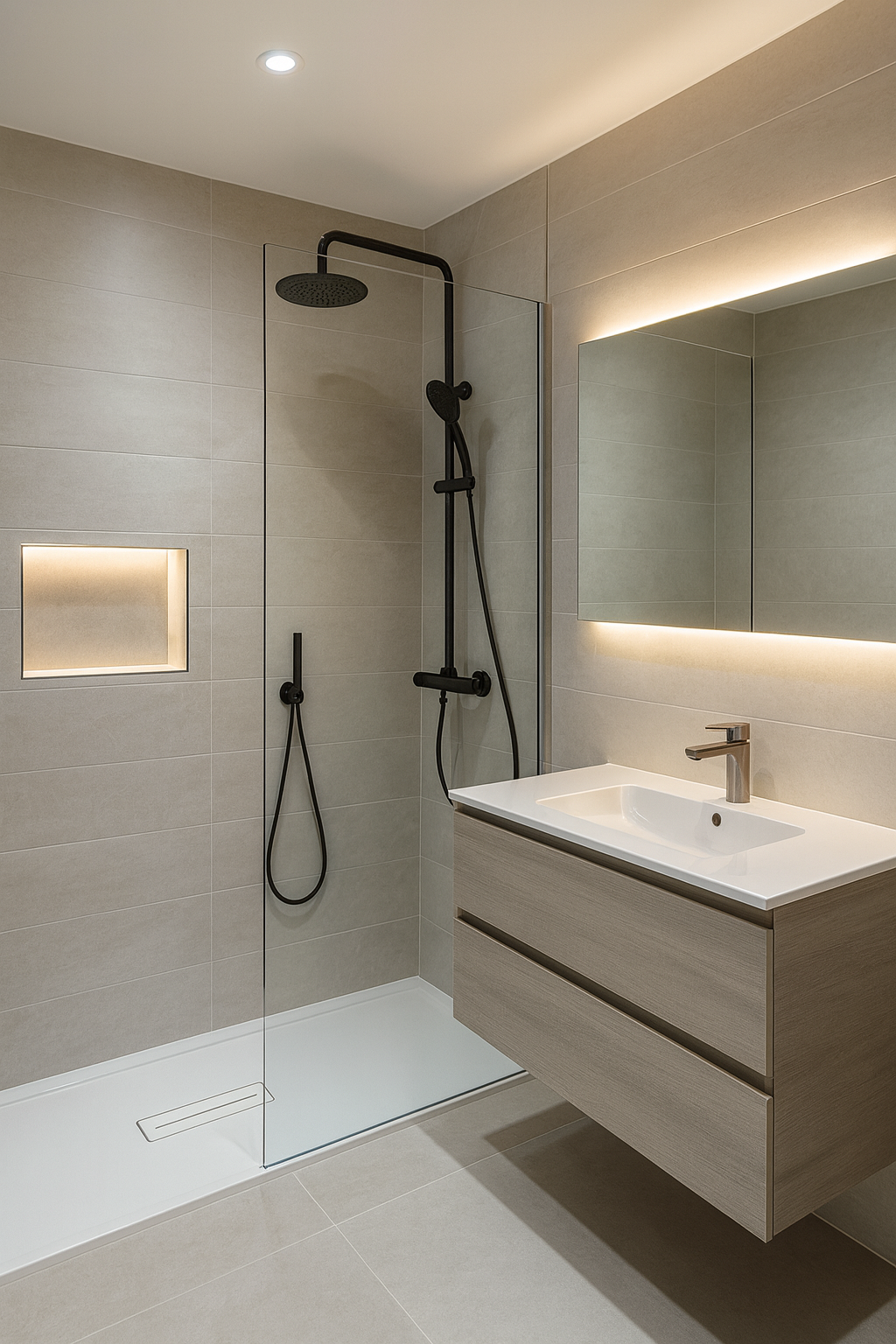
Modern bathrooms lean toward minimalist lines and concealed mixers. They look terrific, but the hidden pipework must remain serviceable. I avoid burying compression joints. Solder or press fittings behind walls, with all mechanical joints accessible. If you’re set on a wall‑to‑wall glass enclosure with linear drains, I’ll recommend a removable panel or a discreet access point. One day, a trap will need attention. Designing for that day now cuts future bills and headaches.
For families with small children or older relatives, thermostatic mixers with anti‑scald limits at the handle are worth their modest premium. Adjusted correctly, they keep outlet temperatures consistent even when a toilet flushes nearby or a washing machine starts. In shared houses around the university, robust bar mixers can take student‑proof abuse better than delicate concealed plates.
How budget shapes choices
A practical, good‑looking shower on a sensible budget is entirely possible. A durable bar mixer from a reputable brand, a well‑supported tray, and porcelain tiles, paired with careful prep, will outlast a flashy but poorly installed setup every time. Spend where it counts: waterproofing, valve quality, and solid fixing. Save on fashion pieces that can be swapped later, like the handset or rail. When budgets are tight, revive the existing shell with a new mixer and reseal, then plan a full refurb when funds allow.
Up the ladder, digital mixers pair neatly with large format tiles and built‑in niches. The premium buys a quieter experience and fine control. Just set expectations: if the home’s supply pressure is mediocre, no tech can cheat physics. A pressure booster system can help, but it needs a proper design that respects water bylaws and backflow protection.
Typical timelines and costs in Colchester
Every home differs, but a rough pattern holds. A like‑for‑like bar mixer replacement with minor pipework tweaks usually lands in the low hundreds for labour, plus parts. A full mixer upgrade with new valve, head, arm, riser, and some tiling repair can reach low four figures depending on tile availability and wall condition. Electric shower replacements vary with whether the cable and breaker are suitable for the new unit. If upgrades are needed, allow time for an electrical check and potential consumer unit work.
Where quotes diverge wildly, scope is often the reason. One price might assume no tile work and surface pipe runs, another might include wall chasing, tanking, and a lifetime of dry walls. Ask what’s included, and whether isolating valves, safe heat protection for soldering near timber, and proper sealant are part of the plan. Skilled plumbing Colchester homeowners appreciate doesn’t cut corners unseen behind the tile line.
Preventive maintenance that actually helps
Shower systems don’t demand daily fuss, but a little care prevents most emergencies. Keep the head clean. Turn the isolating valves off and back on once every few months to stop them from seizing. Watch the silicone lines around trays and corners. If you see dark edges or gaps, deal with them before water exploits the weakness. Check the pump filters every six months on gravity‑fed pumped systems, especially if you’ve had cylinder work done or a tank lid off. On electric showers, ensure the filters at the inlet are clear and that the unit’s front case seal remains tight.
For households with frequent guests or rentals, stick a modest log near the airing cupboard with dates of cartridge changes, pump swaps, and valve installs. The next person to work on your system can save time and money by knowing what’s inside the wall.
When you need help right now
Burst hoses on handsets, trays overflowing because of a blocked trap, pumps that won’t stop, and mixers that scald when the boiler kicks in are all reasons people search for emergency plumber Colchester late at night. A genuine emergency response brings tools, parts, and a plan to stabilise first and fine‑tune later. When you call, clear details speed things up: the shower type, any brand names, where you can isolate water, and whether there’s active dripping onto a ceiling. Photos help. Even better, know where your stopcock and consumer unit are before you need them.
As a plumber Colchester residents call for both quick fixes and long‑term upgrades, I try to keep common cartridges, bar mixers, traps, and flexible connectors in the van. That way, a leak behind a plate or a failed thermostatic core can often be resolved in one visit. If a bespoke part is required, we’ll make the system safe, protect finishes, and schedule a return with the right component.
The small decisions that make a big difference
Little choices during installation pay back for years. Set the bar mixer at a height that suits the shortest and tallest users rather than a generic “shoulder height.” Align wall plates with laser accuracy to avoid stressed connections. Choose a shower door with seals that are stocked locally, not a boutique brand that takes weeks to deliver replacements. Silicone neatly and sparingly, tooling it once, not four times. Masking tape is cheap, scraping cured blobs from stone is not.
Pressure and flow balancing deserve a final test with real shower use. I run water for several minutes, then flush a nearby toilet, run a tap, and start a washing machine to see how the system responds. It’s better to find sensitivity now than after the tiler leaves. If the mixer hunts under changing demand, we may adjust the combi boiler’s flow temperature, clean filters, or recommend a pressure‑reducing valve to tame an overly lively mains.
Signs your shower is trying to tell you something
You can usually spot trouble brewing. The handle turns further than it used to for the same temperature, or the bar mixer’s right side gets hotter than normal. The shower head keeps dripping minutes after shutoff, not just a few seconds of residual water. You hear a clunk when the pump starts, or a new whistle at mid temperature. Grout lines near the tray show hairline cracks, and the silicone bead has gone from bright white to slightly gray with a small gape at corners. Act on these hints. Early intervention is the cheapest repair.
A practical homeowner checklist for shower health
- Know your system type: combi, gravity with cylinder, or electric. Write it on a note inside the bathroom cabinet. Find and label the isolating valves for the shower feeds and the main stopcock. Descale the shower head monthly and clean the trap basket every few weeks. Test the extractor fan with a tissue. If it barely holds, consider an upgrade or check ducting. Keep photos of the valve before tiling if you renovate. Record brand and model numbers.
Local insight: Colchester quirks and common fixes
In new‑build clusters around Stanway, I often find plastic push‑fit manifolds with microbore runs feeding en‑suites. They’re tidy but fussy about flow. Switching to a mixer with lower resistance or re‑routing the final meter in 15 mm copper can transform performance. In older centre‑town semis, gravity systems paired with ageing shower pumps are frequent culprits for noisy mornings. Replacing tired flexible hoses on the pump inlets and ensuring a dedicated, full‑bore cold feed from the loft tank calms things down.
In flats near the station, electric showers are common because they run independently from central hot water. Keep an eye on cable sizes and breakers when changing units. A jump from 8.5 kW to 10.5 kW sounds minor but can overload a circuit not designed for it. I coordinate with electricians familiar with local building management rules to avoid surprises.
Hard water is universal. I’ve seen cartridges seized nearly solid after two years without maintenance. Where budget allows, a compact softener tucked near the stopcock, or at least a quality inline scale reducer, pays dividends. Even if you don’t go that route, a bag of descaling solution in the cupboard and the habit to use it monthly extends the life of the mixer and keeps flow rates honest.
Working with the right professional
Look for someone who asks about your system layout before quoting. A careful plumber will want to know boiler type, cylinder size, loft tank height if present, and your expected flow. They’ll talk through waterproofing, not just tiles and chrome. Good plumbing Colchester homeowners recommend often comes down to communication and tidy, methodical work. If you’re comparing quotes, check whether they include making good, waste removal, brand of fixings, and time for proper testing.
Ask for guidance on spare parts. The best setups use mainstream brands with readily available cartridges and seals. Keep a small folder with receipts, manuals, and photos of the valve body before it disappears behind tile. If you ever need an emergency plumber Colchester based or from nearby, that folder can turn a mystery into a straightforward fix.
Final thought from the wet side of the wall
A great shower is a system, not a pile of parts. Reliable pressure, sound waterproofing, sensible pipe runs, and a mixer that matches your home’s water supply add up to something you trust every morning. When repairs are needed, targeted fixes, not blanket replacements, often make the most sense. And when it’s time to upgrade, put money into the bones you can’t see. The chrome you touch is the easy bit. The craft lives behind the tile line, where a careful plumber sets you up for quiet, hot, predictable water for years. If you’re planning a new install or fighting a temperamental valve, a local plumber Colchester residents rely on will help you choose wisely, install cleanly, and be there when a small sound hints at trouble.